| |
|
BIO Ruth West is an interdisciplinary media artist-researcher working with emerging technologies. She envisions a future in which art-science integration allows us to open new portals of imagination, knowledge and communication across cultures and create solutions for our most pressing global problems. Ruth explores avenues for achieving works with multiple entry points that can exist concurrently as aesthetic experiences, artistic practice or cultural interventions and serve as the basis for artistically-impelled scientific inquiry and tools. Her background spans new media, molecular genetics, information aesthetics, scientific visualization, virtual / immersive environments, augmented reality, psychology, neuroscience, and participatory mobile and social technologies. Ruth's work has been presented or featured in SIGGRAPH, WIRED Magazine’s NextFest, UCLA Fowler Museum, CAA, Ingenuity Festival Cleveland, Los Angeles Municipal Art Gallery, FILE 09 Sao Paulo, IEEE VR, Mobisys, SPIE, IEEE ICIP, the American Journal of Human Genetics, Genomics, Leonardo, LEA, Proceedings of the National Academy of Sciences, NPR's The Connection, NY Times, Genome News Network, AMINIMA and Artweek. |
| |
|
| Selected Projects |
 |
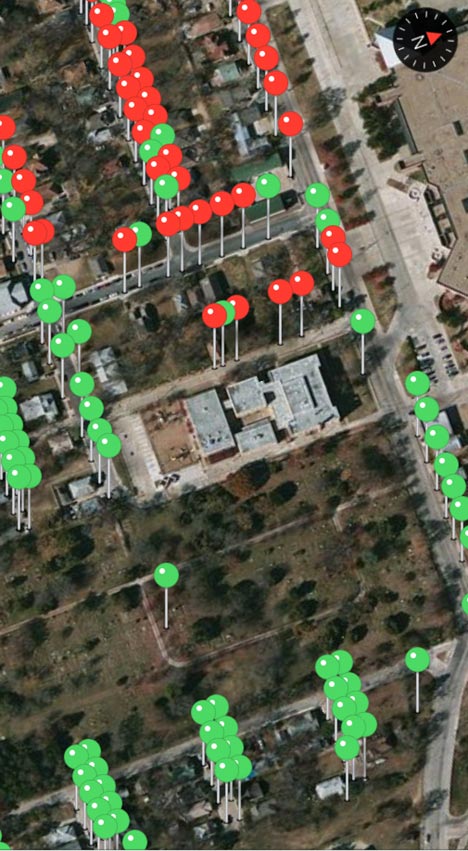
rePhoto, available for iOS and Android devices, is an image capture application explicitly designed to support repeat photography -- the process of taking a new image from exactly the same perspective as a previous image. In rePhoto this is made easier by showing the previous picture half see-through so that a new picture can be more accurately aligned. rePhoto is the result of an ongoing collaboration between researchers at University of Vermont, Washington University St. Louis, and University of North Texas.
Visit: Project rePhoto
|
 |
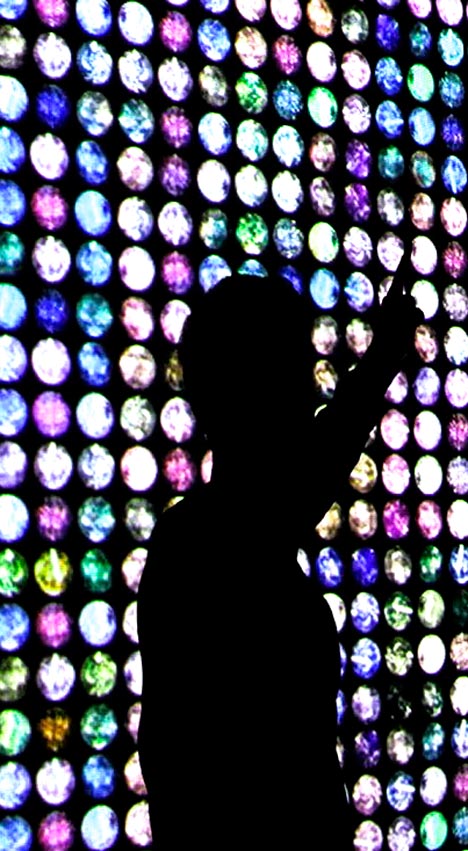
ATLAS in silico reflects on one of the elemental scientific and cultural challenges of our time: the shift from an organism-centric to a sequence-centric view of nature made possible by metagenomics and it’s ensuing impact on our understanding of the nature, origins and unity of life. It is a physically interactive virtual environment/installation and art-science collaboration that provides a unique aesthetic encounter with metagenomics data (and contextual metadata) from the largest known protein sequence dataset, the Global Ocean Survey (GOS) - a ground-breaking snapshot of biodiversity in the world’s oceans.
Visit: http://www.atlasinsilico.net
View project description and video. |
 |
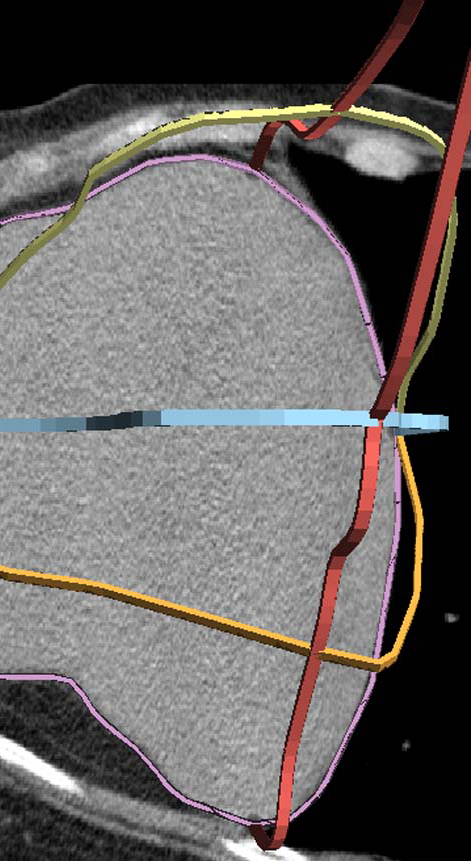
Specialized Interfaces for Segmentation of Time-Varying Volumetric Data is user experience and interfacedevelopment research focused on enabling experts and the general public (citizen scientists) to collaborate in the identification and segmentation of structures within time-varying volumetric data. We are designing methods for navigating within volumetric data and retaining a felt-sense of one’s spatial orientation within the volume, thus enabling users to know where they are within data volumes while utilizing non-parallel (oblique) views. Our twofold aim is to remove segmentation as a bottleneck to discovery and to enable citizen scientists to participate in bio-imaging research in ways that generate calibrated and validated data that has the potential to accelerate scientific discovery.
View project description. |
 |
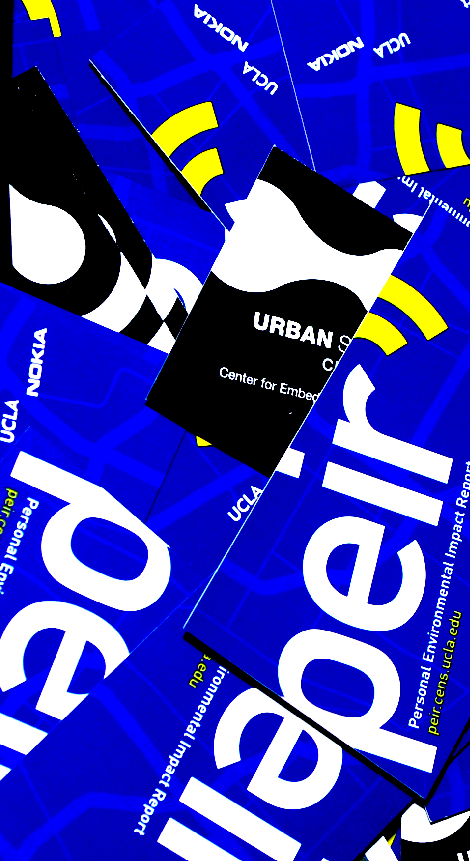
PEIR: Personal Environmental Impact Report is a participatory sensing application that uses location data sampled from everyday mobile phones to calculate personalized estimates of environmental impact and exposure.
Project description, video and publication. |
 |
Ecce
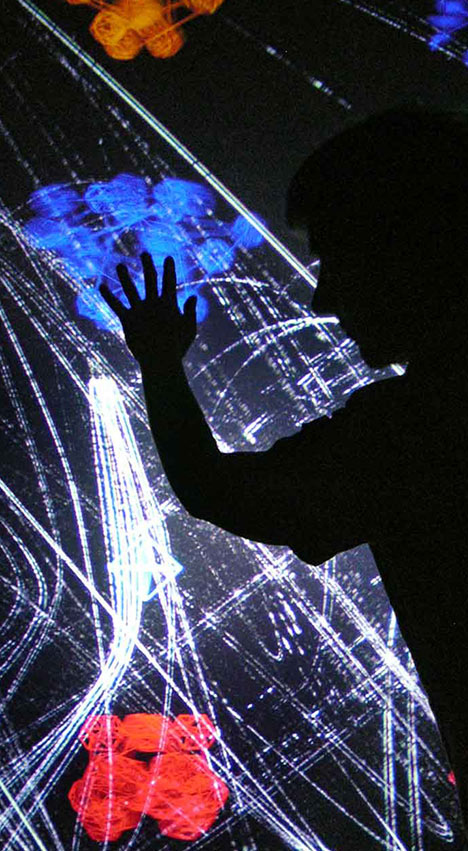
Homology is an interactive installation that bridges art and science through the use of dynamic media, computer vision and computer graphics. Named after Friedrich Nietzsche’s Ecce Homo, a meditation on how one becomes what one is, the project explores human evolution by examining similarities – known as “homology” – between genes from human beings and a target organism, in this case the rice plant.
Visit: http://www.insilicov1.org
A brief description and video are here. |
 |
Creative & Scientific Consulting for Recoding Innovation an NSF sponsored film series dedicated to exploring the ways in which ethical considerations positively drive innovations in scientific discovery.
View project description
|
 |
The
Trajectory of Forgetting is an interactive
installation exploring the nature of memory, its
creation, erasure, and transformation, in an interplay
between genotype and phenotype, and its centrality
to our construct of Self and consciousness.
Description and images: Trajectory |
 |
Stars
is a work that reflects upon the intersection of gender
and the history of science. The sound installation transforms
astronomical data, digitally imaged on to 12" vinyl LPs,
into unique tonal compositions reminiscent of radio astronomy
recordings of pulsars. The strange yet somehow familiar
music mediates the relationship of the data to the history
of its production, as each LP contains the full-hemisphere
astronomical data for the birth or death for each of
several women members of the Harvard College Observatory,
collectively known as "The Harvard Computers" who collectively
are responsible for developing the schema used for classifying
stars by their spectra and cataloging and categorising
the majority of stellar data used as the basis for astromical
maps.
Description, video and images: Stars |
 |
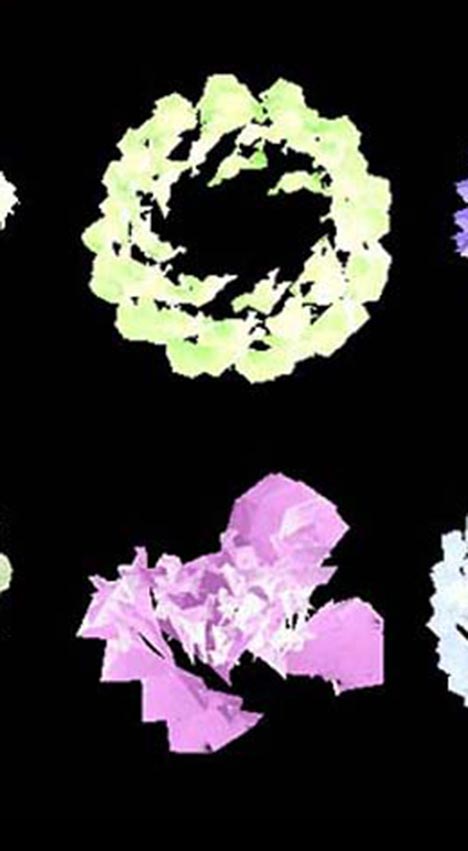
Dreamspace Fragments is an exploration into generating representations of the narrative content of dreams as virtual environments, or "dreamspaces." Using a derivative of the classification
system for dream content analyses developed by Calvin
Hall I encoded the narrative content of
dreams into numeric values
which were then used to define the parameters for generating
3-dimensional objects that are rendered as VRML worlds.
Description and images: Dreamspace |
 |
Multiscale
Data Exploration: Ongoing collaborative research
to develop systems for real-time visualization and
interaction with multi-modal data representing very
large and high-dimensional datasets (2D, 3D, and
4D) within immersive environments utilizing ultra-high
resolution displays connected by high-bandwidth low-latency
networks to facilitate distributed collaboration.
This research integrates ultra-high resolution tiled
displays, computer grahics and visualization, interatctive
technologies and multi-modal, multi-resolution imaging
data of biological systems. Key collaborators: Iman
Mostafavi, Dr. Jurgen Schulze, Raj Singh, in addition
to NCMIR, Calit2 and EVL researchers.
Video and description: Multiscale |
 |
Mixed-media
works on canvas and paper: An exploration
of the potential for transformation of consciousness
through visual experience via the creation of images
that are neither representational nor interpretive
-- images whose sole content is the act of seeing.
View: Works on canvas and paper. |
 |
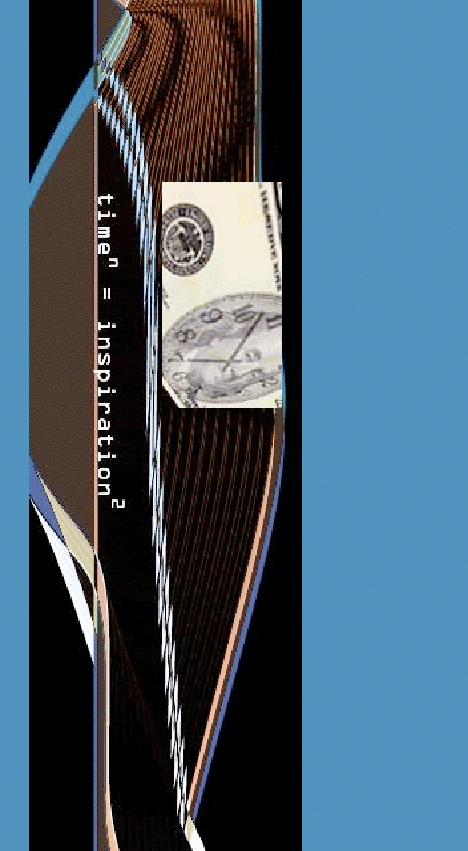
timen = inspiration 2explores
the relationship between time and money, the selling of human time for
money through labor, and the alternative - purchasing time in continuous
or asynchronos multiple dimensions. It is an online experience
where individuals create an alternate identity and go on a shopping
spree for time. In collaboration with Ingo Tributh.
Description and images: Time |
 |
Path
of Silence This project highlight page shows
preliminary studies for a an installation that
would combine real-time video from 11 different
labyrinths throughout the world to form a virtual
11-circuit labyrinth thereby establishing a collective
sacred space that can be experienced by multiple
participants as a single labyrinth.
View sketches: Labyrinth |
| |
 |
|
Ruth West
Associate Professor and director, xREZ lab. University of North Texas
Ruth is cross-appointed in the College of Information / Library and Information Sciences, College of Visual Arts and Design / New Media, College of Arts and Sciences / Biological Sciences, College of Engineering / Computer Science and the iARTA interdisciplinary art and technology research cluster. Prior affiliations include: UCSD Center for Research in Computing and the Arts (CRCA)/Calit2, UCLA CENS (NSF Center for Embedded Networked Sensing), NCMIR (National Center for Microscopy and Imaging Research), UCLA Design | Media Arts, and Cedars-Sinai Health System.
View: xREZ art-science-humanities research lab.
Highlights
I'm participating in the SEAD Network (Network for Science, Engineering, Art and Design).
Upcomoing exhibit and talk: Perot Museum of Nature and Science, June 2013
Giving a talk at SIGGRAPH 2013, July 2013
Keynote iSchools Conference 2013
|